Speakers


Prof. André A. Keller, Associate researcher, University Paris 1 PANTHEON SORBONNE, France.
André A. Keller is currently attached to the research team SAMM: Statistics, Analysis, and Multidisciplinary Modeling (EA 4543/CNRS) by this University, since 2019. He is Editor-in-Chief for Journal of Computational and Applied Mathematics (Elsevier), since 2019. He is actually the Editor-in-Chief of the special issue ‘Advanced Mathematics for Artificial Intelligence & Biomedical Applications’. He is an Associate Member of IEEE organization (Institute of Electronical and Electronics Engineering) since 2025. He is currently participating as an invited Professor to academic lectures, co-rewriting Research Papers and other projects, within universities in China, Thailand.
André A. Keller received a ‘Doctorat d’Etat’ (PhD.) in Economics with mention Operations Research from University of Paris PANTHEON SORBONNE in 1977, and a post-doctorate from University Paris X Nanterre. He was a reviewer for other journals. As a Full Professor (‘Professeur des Universités’) he taught notably optimization techniques, econometrics, theory of games. He was an Associated Researcher at the ‘Center for Research in Computer Science, Signal, and Automatic Control’ by University of Lille in 2012-2018. He received best paper awards notably from American Math’10 in Harvard University.
André A. Keller’s initial experience also include high-dimentional time-series modeling, discrete mathematics (graph theory, combinatorial optimization), stochastic differential games and tournaments, circuit analysis, optimal control under fuzzy uncertainties. His publications consist of writing articles, book chapters, and books. The book chapters are on ‘Semi-reduced forms,’ ‘Econometrics of technical change,’ ‘Advanced time-series analysis’, ‘Stochastic differential games,’ ‘Optimal fuzzy control.’ One book is “Time-Delay Systems with Applications to Economic Dynamics & Control” (LAP, 2010). One another book is “Mathematical Optimization Terminology: A Comprehensive Glossary of Terms” (Elsevier/Academic Press, USA, 2017). Other more recent books are “Multi-Objective Optimization in Theory and Practice I: Classical Methods” and II: Evolutionary Algorithms” (Bentham Science Publishers, 2017, 2019). As Journal Editor, he directed the Elsevier’s special issue names ‘Multiobjective Games and Applications’ in 2022-2024.
Speech Title: Multi-agent reinforcement learning techniques in N-player strategic games
Abstract: This study introduces reinforcement learning methods to multiple agents with uncertain actions to be taken. The system describes interactions between agents (or groups of them) and their shared environment, involving the use of reinforcement learning (RL) techniques for some parameter estimates. Each agent, or a network of which he could take part, acts on the environment of which it changes the previous state. This new observation is notified to the agent or networked agents. Their received reward relates to the quality or performance of their action. It can be shown that the repetition of this interaction through time always converges towards an optimal solution of discounted cumulated revise returns obtained by experiences alone without any model. This study aims to develop a comprehensive modeling chain comprising the theoretical foundations, developments and implementation. However, it is not approaching the most recent successful deep learning using an artificial neural network. Modeling applied to a single agent may be enough to explain and study basic concepts and techniques, as in this study. However multiple agents system allows to approach the organization of agents and the nature of their individual or collective behaviors. Thus, a controller can intervene to collect information and initiate joint actions. Agent behavior can be rather cooperative, or competitive, or mixed. We then show the interest of using the solutions of the game theory in this case since the action of multiple agents in MARL leads to non-stationary environment and partially observable system. The implementation of the algorithms operates around the Bellman equation. A description compares the Q-learning and RL-learning approaches. The complete implementation of Q-learning is shown by using the known example of the shortest route between two points of a frozen lake broken by water holes.


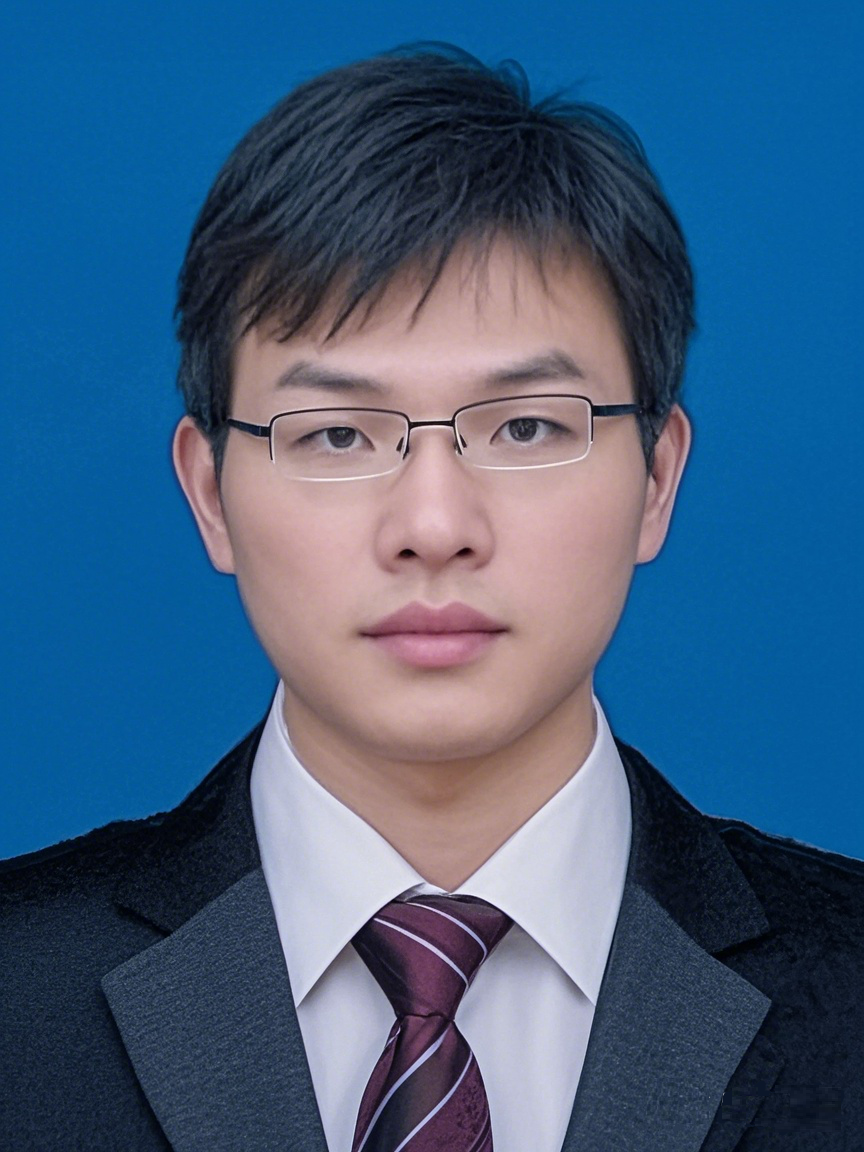
Prof. Ming-Feng Ge, China University of Geosciences, Wuhan, China.
Dr. Ming-Feng Ge is currently a Professor and Doctoral Supervisor, serving as the Vice Dean of the School of Mechanical and Electronic Information at China University of Geosciences, Wuhan. He was selected into the National Young Talent Program and the Hubei Province High-Level Talent Program. He was awarded a Bachelor of Science degree in Automation from Huazhong University of Science and Technology (HUST) in 2008 and subsequently conferred a Doctor of Philosophy degree in Control Theory and Engineering in 2016. As an IEEE Senior Member, he was selected for the Top 2% Scientists Worldwide list, jointly published by Stanford University and Elsevier. He has an extensive research background in robotics, automatic control, and artificial intelligence, with a focus on human-in-the-loop systems, human-robot collaborative control, cyber-physical systems, swarm intelligence, and computational neuroscience. He has published over 160 SCI papers, including 51 journal articles in IEEE Transactions and Automatica. Seven of his papers have been recognized as Highly Cited Papers in the top 1% of ESI, with one of them being among the top 0.1%. Prof. Ge is serving as the section editor or associate editor for several international journals, for example, Science Progress (SAGE Journals), Frontiers in Robotics and AI, Frontiers in Neurorobotics, Electronics Letters (IET), International Journal of Dynamics and Control (Springer), Cyber-Physical Systems (Taylor & Francis Online). He has been the corresponding author of the featured cover paper for VOLUME 31, ISSUE 18 in International Journal of Robust and Nonlinear Control. He has been rewarded as the Outstanding Reviewers of 2019 in Asian Journal of Control. He is a member of the Sakura Science Club and successfully achieved the course of Japan-Asia Youth Exchange program in Science (SAKURA Exchange Program in Science) administered by Japan Science and Technology Agency in 2016. He has been the deputy secretary general of the IEEE Industrial Electronics Society TC16 Technical Committee (China), the Executive Director of TC13 Technical Committee (China) since May, 2022. He has been the Member of Technical Committee on Control Theory (TCCT) Multi-agent Group, Chinese Association of Automation since 2018. He has also served as the General President of the 2022 International Conference on Applied Mathematics and Digital Simulation (AMDS 2022), the Vice President of The 8th International Conference on Digital Manufacturing and Automation (ICDMA 2022), as well as many chairs and Special Section Organizers of other international conferences. He has also been invited as the Keynote Speaker in the 2017 2nd International Conference on Mechatronics and Electrical Systems (ICMES 2017). Professor Ge's contributions to both academia and industry have been widely recognized internationally. He has earned multiple provincial and national honors, such as the Second Prize in Technical Invention from the China Command and Control Association, the Second Prize for Teaching Achievement in Hubei Province, and the Second Prize for Scientific and Technological Progress from the China Light Industry Federation.
Speech Title: Multi-Robot Cooperative Control and Application
Abstract: Multi-robot cooperative control constitutes a critical capability for unmanned system operations within contemporary military transformations, as evidenced in modern conflicts. However, autonomous multi-robot coordination faces significant challenges, including complex constraint management, sluggish response to multi-source disturbances, and heightened vulnerability to malicious attacks. This study addresses three pivotal aspects: First, a decoupled control mechanism under multi-constraint conditions is established to significantly enhance error convergence in heterogeneous multi-robot systems. Second, an optimization control method for multi-source disturbances is proposed, achieving rapid optimization via non-smooth disturbance rejection mechanisms and hierarchical optimization frameworks. Third, resilient coordination strategies under trusted filtering are developed to overcome limitations imposed by upper bounds on malicious nodes and time-varying topologies. Future research will focus on multi-robot adversarial games, prioritizing: unified modeling of multi-game scenarios, game reconstruction under damage conditions, and strategy evolution within adversarial environments.


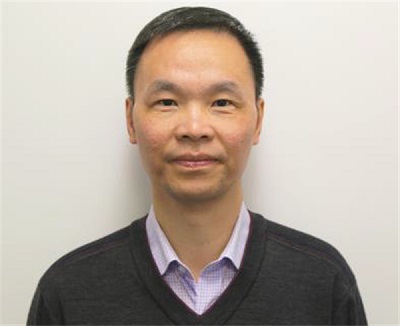
Prof. Lantao Xing, Shandong University, China
Lantao Xing received his Ph.D. degree in Control Science and Engineering from Zhejiang University, China, in 2018. He then served as a Research Fellow at Queensland University of Technology, Australia, and as a Presidential Postdoctoral Fellow at Nanyang Technological University, Singapore. Currently, he is a Full Professor in the School of Control Science and Engineering at Shandong University, China. He was awarded the Best Paper Award at ICIEA 2021. Additionally, he serves as an Associate Editor for both IEEE Transactions on Industrial Electronics and IEEE Transactions on Smart Grid. His research interests include nonlinear system control and distributed control with various applications.
Speech Title: Distributed Control of DC Microgrid: The Concepts of VVD and VCD
Abstract: The direct current (DC) microgrid is gaining increasing attention in modern power systems. A key challenge in the operation of DC microgrids is ensuring proper current sharing among converters. While this issue is typically addressed using droop control, the resulting voltage deviations in the DC bus require compensation. To address this challenge, two novel concepts—Virtual Voltage Drop (VVD) and Virtual Current Directive (VCD)—are proposed. By dynamically averaging VVD and VCD, both current sharing and voltage stability can be effectively maintained. Moreover, a relaxed upper bound for the constant power loads can also be obtained. Simulation and experimental results will be presented to demonstrate the effectiveness of the proposed control strategies.


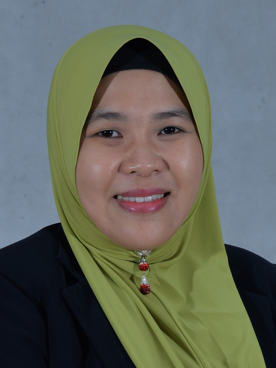
Assoc. Prof. Ir. Dr. Rosmiwati Mohd Mokhtar, Universiti Sains Malaysia, Malaysia (IEEE Senior Member)
Ir. Dr. Rosmiwati Mohd-Mokhtar is an Associate Professor at the School of Electrical and Electronic Engineering, Universiti Sains Malaysia. Beginning with a distinguished academic journey, she earned her B.Eng. with honours and an M.Sc. in Electrical and Electronic Engineering from Universiti Sains Malaysia, followed by a Ph.D. in Electrical Engineering from the Royal Melbourne Institute of Technology University in Australia. Her pioneering research in system identification, advanced control system design, process modelling, process optimization, mechatronics, and underwater systems has enriched academic and research discourse and set the stage for transformative real-world applications. A prolific author with numerous publications in prestigious journals, book chapters, and international conferences, Dr. Rosmiwati is recognized as a Chartered Engineer (C.Eng.) by the Institution of Engineering and Technology (UK), a Professional Engineer (P.Eng.) by the Board of Engineers Malaysia, ASEAN Chartered Professional Engineer, a Senior Member of IEEE, a member of the Institution of Engineers Malaysia, and a member of the Malaysian Society of Automatic Control Engineers (MACE). Her visionary work continues to inspire and empower the next generation of engineers to make a lasting global impact.
Speech title: Next-Level Automation for Stability, Precision, and Safety in Power Tool Systems.
Abstract: Advancements in automated control systems are crucial for improving the performance and reliability of modern power tools. This presentation explores next-level automation strategies for torque and vibration control, with a focus on rotary impact driver systems. The discussion covers integrating high-resolution sensors, real-time signal processing, and adaptive control algorithms to achieve precise torque regulation and effective vibration mitigation. Emphasis is placed on closed-loop architectures, data-driven parameter tuning, and dynamic feedback to reduce performance deviations under varying load and material conditions. Results from practical implementation demonstrate measurable gains in torque consistency, reduced vibration transmission, and enhanced operational stability. This work highlights the technical pathways by which automation can significantly elevate tool performance, durability, and safety in industrial applications.


Assistant Professor Kanchana Daoden, Uttaradit Rajabhat University, Thailand
Kanchana Daoden is currently an Assistant Professor, PhD. of Smart Electronics Engineering at the Faculty of Industrial Technology with a bachelor’s degree, and she is also a lecturer in the Department of Management Engineering with a master’s degree at the Faculty of Industrial Technology, Uttaradit Rajabhat University. Kanchana Daoden graduated with a bachelor’s degree in computer science from Chiangmai Rajabhat University—a master’s degree and PhD in Computer Engineering from Chiang Mai University, Thailand. The experienced researcher is one of the reviewers in the Computer & Industrial Engineering journal in 2019-2023. She has been the invited session chair on sustainable Modelling, Computing and Optimization in Online Platforms via Zoom Webinar on ICO 2021. Kanchana Daoden is a Best Paper Award at the 5th International Conference on Intelligent Computing and Optimization with the title "Hybrid Shuffled Frog Leaping Algorithm using the Angle and Sigma compared with 4 Benchmark function", on October 27-28,2002, Indexing in Springer Link. She has been the session chair in session 2, day 2 of the 7th ICO2023, Cambodia. Her teaching and research interests include optimization problems, machine learning in agriculture in the local area and their applications in machine learning, and industrial engineering.
Speech title: The Agriculture Harvesting Robot Model Support for Elderly Farmers
Abstract: This research presents the design and development of a harvesting robot specifically tailored to assist elderly farmers in Thailand using mixed Artificial Intelligence and the Internet of Things technology. In agriculture, the two challenges are the age of farmers and current new-generation labour shortages, automation presents a viable solution. The proposed harvesting robot aims for two challenges, to enhance productivity and ensure sustainable agricultural practices. A characteristic of harvesting robotic features is combining a mobile robot base with a robotic arm and several sensors for navigation and agriculture crop detection. The robotic mobile base ensures stability and adaptability across various site terrains, while the robotic arm, handles delicate harvesting operations. Complex vision systems incorporate cameras and 3D sensors, helping the robot to identify ripe crops accurately and navigate through fields autonomously. The result shows the agriculture harvesting robot's capability to operate efficiently, reduce step intensity and increase harvest yield.